


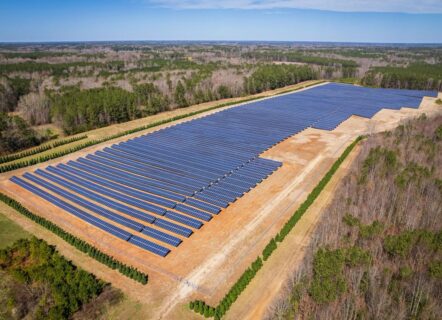
The finish line is in sight. After months of precise engineering, disciplined procurement, and on-site execution, Nomad Electric has brought our 20 MWp photovoltaic project in Germany to 95% completion. This milestone opens a new chapter in our international expansion and confirms what we set out to prove on the most demanding renewable energy market in Europe: that a Polish EPC can deliver to German standards, end to end.
From groundbreaking to grid connection
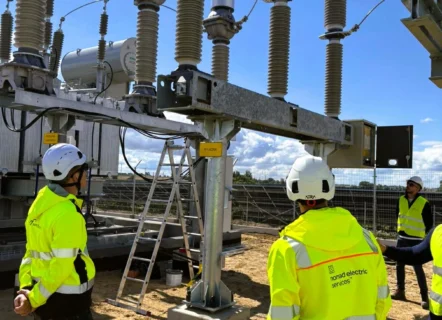
Building a 20 MWp plant demands tight logistics, deep familiarity with local regulations, and engineering executed without margin for error. The mechanical and DC infrastructure now stands. Thousands of PV modules are mounted, cabled, and ready. The Nomad Electric EPC team has shifted focus to the phase that defines this project: the substation and grid connection. Synchronizing energy from thousands of PV modules with the local distribution network, meeting strict grid-code compliance, engineering every interface between the plant and the utility. We energize the plant ourselves, through our dedicated commissioning team because we keep that capability fully in-house. As a result we have one accountable team from feasibility to first kilowatt-hour, no handover gaps.
A strategic entry into Germany
This 20 MWp installation is our debut on the German market — and a deliberate one. For any EPC contractor, Germany is the ultimate proving ground: one of the most mature, demanding, and regulated renewable energy markets in Europe. The bar for quality, safety, and grid compliance is set higher here than almost anywhere else on the continent. We did not come to Germany for a single contract but we came to stay. The Energiewende needs partners who can deliver utility-scale assets on time, on spec and who will not blink when the regulatory or technical complexity gets real.
The final stretch: commissioning
The remaining 5% is where engineering discipline is tested. A sequence of highly specific procedures, electrical tests, protection settings, and safety protocols that must align before a single kilowatt-hour reaches the grid. Functional tests on transformers and switchgear, protection coordination with the network operator, SCADA integration or inverter parameterization. Performance verification at full load. Each step is documented and signed off before the next one begins. There is no shortcut through commissioning. This is the part of the work that does not generate photographs or headlines, but determines whether a plant performs reliably for the next 30 years.
Looking ahead
Within weeks, 20 megawatts of solar capacity will begin feeding the local grid, delivering clean energy to thousands of German households and adding measurable capacity to the Energiewende. For our team this project closes one chapter and opens several more. The lessons, the relationships, and the operational track record we are building here become the foundation for the next German projects and for our continued expansion across Europe.
read next

Never Stop
