


Investment planning and route selection
The first stage of every power investment is determining the actual need for new infrastructure and defining its basic technical parameters. At this stage, anticipated network loads, connection possibilities, system operator requirements, and site conditions are analyzed. Environmental analyses are also of significant importance, as they make it possible to assess the impact of the planned investment on the surrounding area. Selecting the route itself is not limited to identifying the shortest path between two points. It is necessary to analyze various possible routes while taking into account existing buildings, technical infrastructure, protected areas, geological conditions, and planning restrictions.
Property-related issues also arise at this stage. Power lines very often pass through properties owned by numerous private entities, businesses, or local government units. This means that agreements with landowners must be reached, the terms of access to the land must be determined, and solutions enabling the future implementation of the investment must be developed. Depending on the nature of the project, this may involve establishing appropriate rights to use the property or applying other legal instruments provided for by regulations.
Planning and environmental documentation is prepared in parallel. For some investments, it is necessary to obtain an environmental decision preceded by an assessment of the project’s impact on the surrounding area. This stage is often a source of significant delays, especially when comments are submitted by local residents or additional documentation becomes necessary.
Design and obtaining permits
Once the investment assumptions have been established, the design stage begins. Preparing the technical design involves more than simply creating a route layout. The documentation must include:
- technical parameters of the installation,
- selection of support structures,
- foundation solutions,
- operational requirements,
- safety requirements,
- applicable technical requirements.
The scope of the design depends on the type of investment. Different requirements apply to overhead lines than to underground cable infrastructure. The differences concern not only the construction technology but also the execution of works, operating conditions, and potential technical risks. For this reason, the design stage requires close cooperation between specialists from various fields, including design engineers, surveyors, environmental experts, and professionals responsible for legal and regulatory matters.
An important part of investment preparation also involves coordination with the power system operator, including defining the connection conditions and the requirements for integrating the new infrastructure with the existing network. Without this, it is not possible to properly plan the technical parameters of the investment.
Administrative procedures are carried out in parallel. Depending on the nature of the project, it may be necessary to obtain location decisions, construction permits, industry approvals, and other decisions required under applicable regulations. At this stage, the proper preparation of documentation becomes particularly important. Even minor formal errors may require parts of the procedure to be repeated and extend the project schedule.
Only after these activities have been completed can the investment be prepared for construction. This includes logistics planning, organization of the technical facilities, work scheduling, and coordination of all parties involved in the project.
Power line construction on site
The construction stage is the most visible part of the entire process, although in reality it is the result of many months of preparation. The scope of work depends on the type of infrastructure being built, but generally begins with site preparation and the organization of the construction site. This includes route surveying, securing the work area, preparing access roads, and carrying out earthworks.
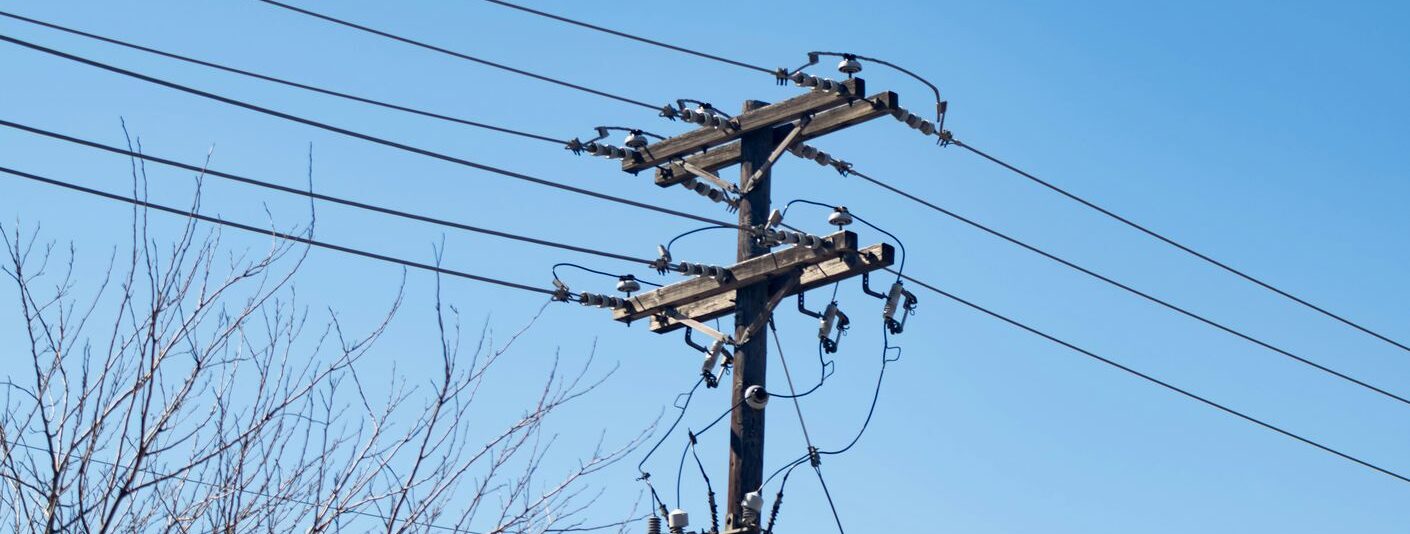
For overhead lines, the next step is the construction of foundations and the installation of support structures. This stage requires precision because even minor deviations may affect the operational safety of the entire system. After the poles have been erected, technical equipment is installed, followed by stringing of the conductors and protective wires. These works are carried out using specialized equipment and under strict technical supervision.
If the investment concerns an underground cable line, the process is different. In this case, trenches are excavated, appropriate route protection is prepared, cable infrastructure is installed, and technological connections are completed. Each solution requires a different organizational and technical approach.
Quality control is of particular importance during the construction stage. It includes verification that the work complies with the design documentation, inspection of the technical parameters of the materials used, and ongoing supervision of construction safety. Linear infrastructure projects often intersect existing road, telecommunications, or transmission infrastructure, making careful coordination of all activities essential.
Testing, acceptance, and commissioning
The completion of construction work does not yet mean that the infrastructure is ready for operation. Before the line is commissioned, a series of technical measurements and acceptance tests must be carried out. Their purpose is to confirm that the installation has been completed in accordance with the design, meets safety requirements, and can be safely integrated into the power system. This includes checking technical parameters, verifying the correct installation of individual components, and assessing the project’s compliance with applicable standards and operator requirements. Formal acceptance procedures related to the completion of the investment process are carried out in parallel. Only after these procedures have been successfully completed can the infrastructure be put into operation and integrated with the system. This is the point at which the multi-stage investment process achieves its practical objective.
The construction of a power line is an undertaking that requires an effective combination of technical, organizational, and legal expertise. The success of the investment depends on the quality of the construction work itself, but above all on proper formal preparation and realistic planning of the entire process. The greatest challenges usually arise where the interests of the investor, administrative requirements, and local site conditions intersect. For this reason, the successful implementation of such projects requires experience, effective coordination, and a thorough understanding of the applicable procedures.
Nomad Grid supports the implementation of linear infrastructure projects at every stage. From project preparation, through the organization of field work, to technical supervision and acceptance.
Frequently asked questions (FAQ)
1. How long does the construction of a power line take?
The completion time depends on the scale of the investment, its location, and the scope of the required administrative procedures. The entire process, including planning, design, obtaining decisions, and carrying out construction work, may take from several months to even several years.
2. How does the construction of a power line begin?
The first step is to analyze the needs of the power network and select a preliminary route for the investment. At this stage, among other things, site conditions, existing buildings, environmental aspects, and issues related to land ownership are taken into account.
3. Can a power line run through private property?
Yes. Many investments require infrastructure to be routed through properties owned by private individuals or businesses. In such cases, the rules for using the land must be regulated in accordance with applicable regulations.
4. What documents and permits are required to build a power line?
The scope of the required documents depends on the type of investment. It may include, among other things, an environmental decision, industry approvals, location decisions, and permits required under construction and energy law regulations.
5. What is the difference between the construction of an overhead line and an underground cable line?
An overhead line requires the construction of foundations, installation of poles, and stringing of conductors. In the case of an underground cable line, trenches are excavated, cables are laid underground, and technological connections are completed. The two solutions differ in terms of construction technology and operational requirements.
6. When can a new power line be put into operation?
After construction work has been completed, technical measurements, tests, and formal acceptance procedures are carried out. Only after confirming that the investment complies with the design and safety requirements can the line be integrated into the power system and begin operation.
read next
Never Stop
